Introduction: Why AI Is a Big Deal in Restaurant Marketing
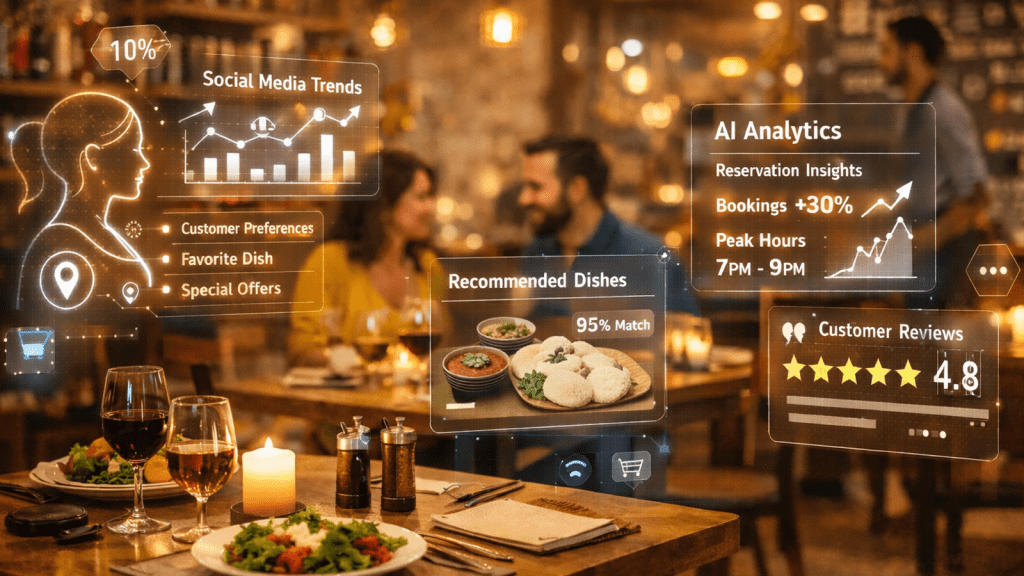
Artificial Intelligence (AI) is no longer just a buzzword — it’s reshaping how restaurants attract, engage, and retain customers. Today’s diners expect relevant suggestions, personalized offers, and digital convenience. As restaurants adopt next-gen restaurant tech, AI has become a powerful tool in every marketer’s toolkit.
But while AI offers major advantages — automation, customer insights, and scalability — it also brings new challenges, especially around maintaining a restaurant’s unique brand voice and authentic connection with its audience.
This blog explores the pros and cons of using AI in restaurant digital marketing, provides data-backed insights, and helps you use AI confidently without sacrificing your brand identity.
The Pros: What AI Brings to Restaurant Digital Marketing
1. Smarter Personalization That Drives Engagement
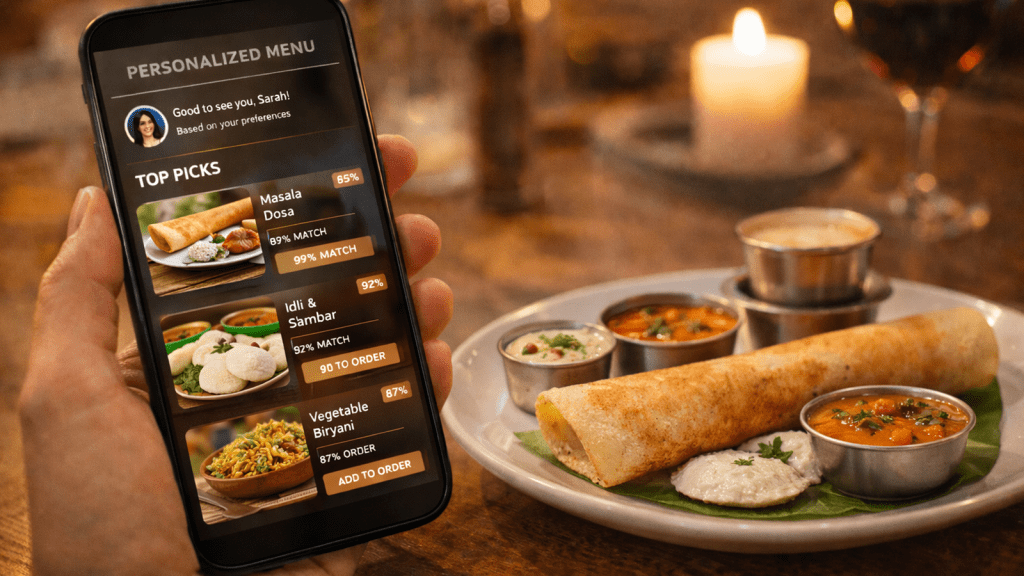
One of the strongest benefits of AI is the ability to offer individualized experiences. Studies show that AI-driven menu personalization can increase average check size by 15–20% and 70% of diners prefer experiences enhanced by AI personalization.
Example: An online ordering system can use AI to recommend popular dishes based on a customer’s past orders or preferences, resulting in higher conversions.
Why it matters: Personalized messages and offers feel more relevant and increase customer loyalty and repeat visits.
2. Automation That Saves Time and Improves Efficiency
AI can automate many marketing tasks — from generating campaign ideas to scheduling social posts to responding to FAQs via chatbots. According to data, AI-powered chatbots handle up to 80% of customer inquiries in some restaurants.
Example: Chatbots on restaurant websites or Facebook pages can answer opening hours, menu questions, or reservation requests without human intervention — freeing up staff to focus on guest experience.
Why it matters: Automation reduces workload and ensures your brand stays responsive 24/7.
3. Better Targeting With Data and Predictive Insights
AI tools leverage customer behavior, buying patterns, and engagement data to optimize marketing campaigns. Around 60% of restaurants use digital analytics to personalize marketing campaigns.
Example: AI platforms can analyze purchase data to identify your most valuable customer segments and tailor offers that resonate with each group.
Why it matters: Smarter targeting means higher ROI on ad spend and more meaningful communication with your audience.
4. Enhanced Digital Experience Across Channels
In the era of digital transformation, diners expect seamless experiences from discovery to checkout. Over 63% of consumers prefer ordering food via mobile apps, and 68% of operators have implemented contactless payment systems.
Example: Linking AI-powered recommendations in your email campaigns with a mobile-first digital ordering system provides a cohesive brand experience that feels thoughtful and modern.
Why it matters: A consistent, engaging digital journey builds trust and keeps customers coming back.
The Cons: Challenges and Cautions With AI in Marketing
1. Risk of Losing Human Brand Voice
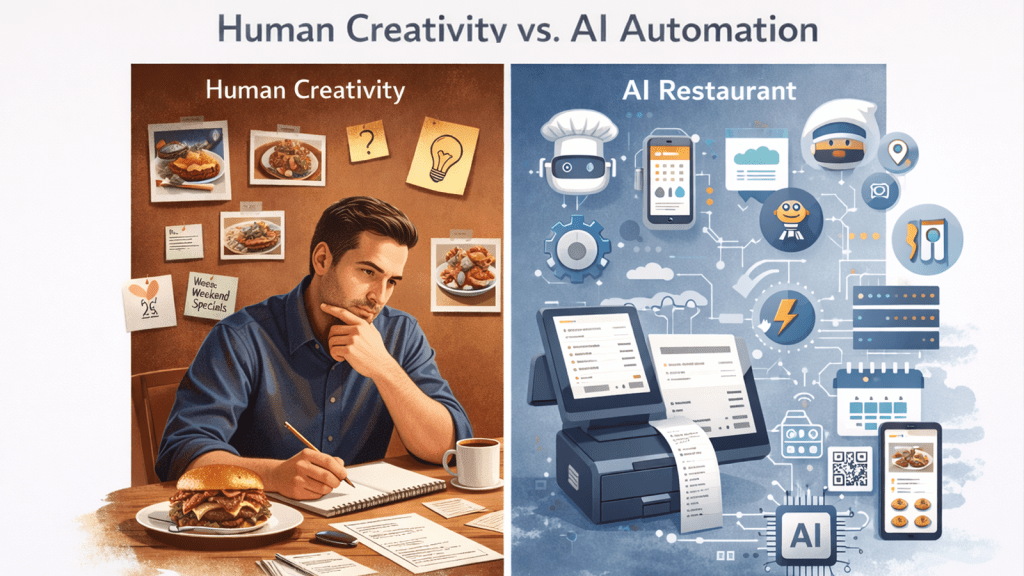
One of the biggest concerns restaurants face when using AI is sounding too generic or robotic. A tool might generate marketing copy that is technically correct but lacks the emotional nuance of your brand.
How to avoid it:
- Always review AI-generated content before it goes live
- Infuse your brand’s tone, personality, and local flavor into messages
- Use AI as a helper — not a full replacement for human writers
2. Customer Skepticism or Overreliance on Technology
While many customers enjoy personalization, not everyone trusts AI unreservedly. Research shows that 60% of consumers prefer human support over full AI-managed service, and some diners avoid restaurants with too much self-service technology.
Solution:
Offer technology as an option, and ensure there’s always a human touchpoint when needed — such as live support or on-floor staff who can take over.
3. Data Privacy and Ethical Concerns
AI thrives on data. But customers are increasingly aware of privacy issues related to personalization. Mishandling customer data can damage trust, especially if customers feel their preferences are being tracked without transparency.
Tip:
Be clear about how you collect and use data, follow proper data protection practices, and never store or share customer data without consent.
4. Cost and Complexity of Implementation
AI solutions often require upfront investment and technical know-how. While 55% of restaurant operators plan to increase investment in AI tools, not all restaurants are ready for it.
Best practice:
Start with AI features that deliver clear value — like chatbot replies or personalized offers — and scale gradually as you see results.
Balancing AI With Authentic Brand Voice
Using AI is not an all-or-nothing decision. The key to success is combining the efficiency of AI with your restaurant’s unique identity. Here’s how:
Use AI for Data and Ideas, Not Final Copy
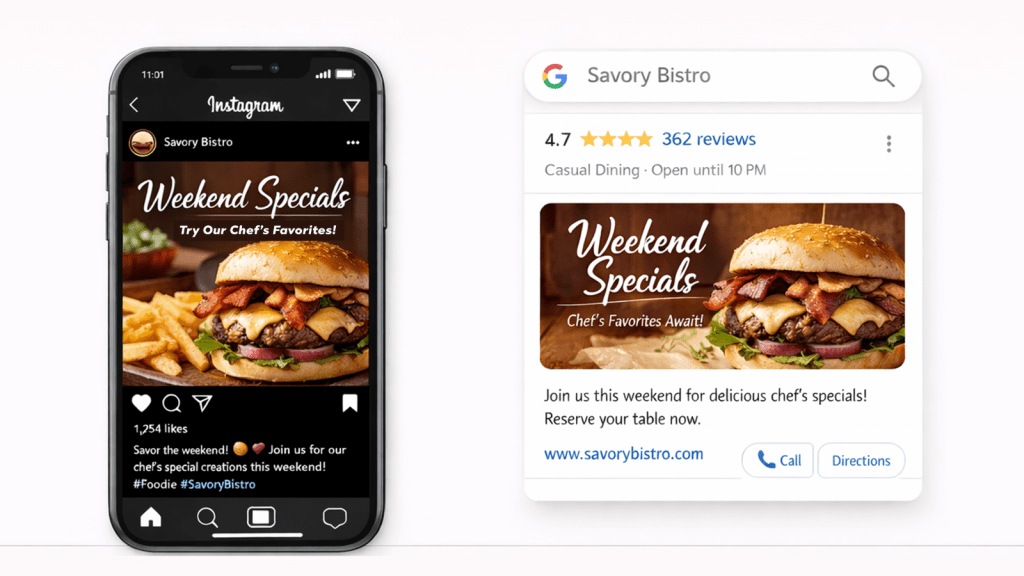
AI excels at generating suggestions or analyzing patterns — but your brand tone, personality, stories, and customer relationships should always be defined by humans.
Blend Technology and Humanity
Offer options: let diners use self-service ordering, but give them the chance to talk to a person if they prefer. This blend is especially appreciated since guests differ widely in comfort with automation.
Train Staff on AI Tools
Having employees understand how AI works — and where it shouldn’t replace human judgment — keeps your service human-centered.
Conclusion: Use AI as an Assistant — Not the Voice of Your Brand
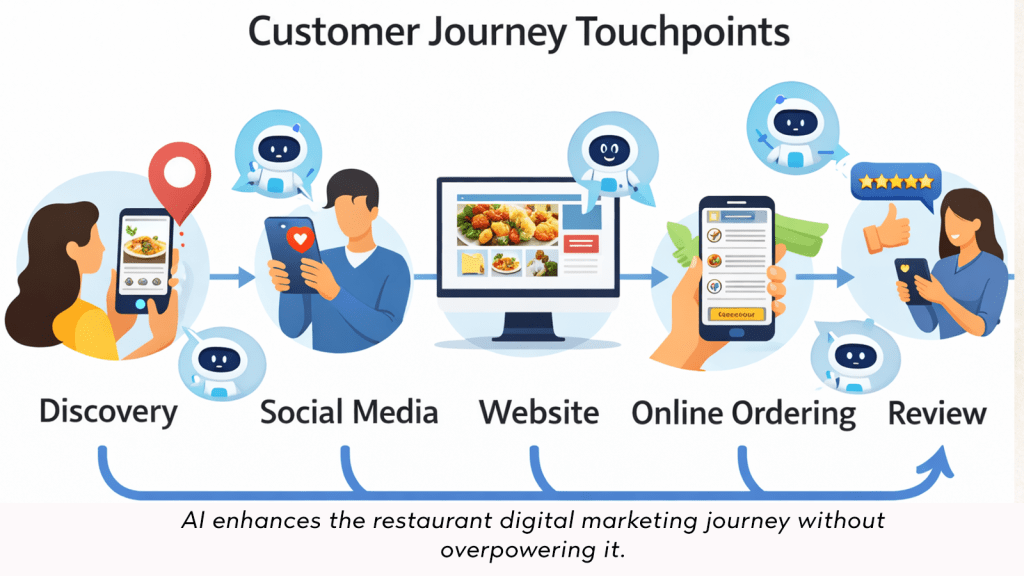
AI is transforming restaurant digital marketing by enabling personalization, automation, and data-driven decision-making. With projections showing increasing adoption of AI and digital analytics across the industry, restaurants that integrate AI wisely will enjoy stronger customer engagement, operational efficiency, and competitive advantage.
However, the heart of your restaurant — your brand voice, human interaction, and unique identity — must stay center stage. The restaurants that succeed won’t be the ones who replace people with algorithms, but those who use AI to enhance human creativity while staying true to their story.
Supporting Stats at a Glance
- AI chatbots handle up to 80% of customer inquiries.
- AI personalization can increase check size by 15–20%.
- 60% of restaurant operators use AI or analytics to personalize marketing.
- Over 63% of consumers prefer ordering via mobile apps.
- 68% of restaurants have adopted contactless payment systems.

 MAGHIL