Introduction
Running a single restaurant is demanding, but managing multiple outlets—whether in the fast-paced world of quick-service restaurants (QSRs), the sophistication of fine dining, or the balanced approach of casual dine-in—is a whole new level of complexity. From inventory tracking to staff scheduling and customer experience, restaurant groups in the U.S. face mounting challenges.
This is where a Multi-Outlet POS System like Maghil becomes the backbone of modern restaurant management. With the right POS software for restaurants, operators can achieve centralized control, improve efficiency, and deliver consistency across all locations. Let’s explore how an effective restaurant POS system like Maghil POS transforms multi-location operations into a well-oiled, scalable business model.
Centralized Control with a Multi-Outlet POS Dashboard
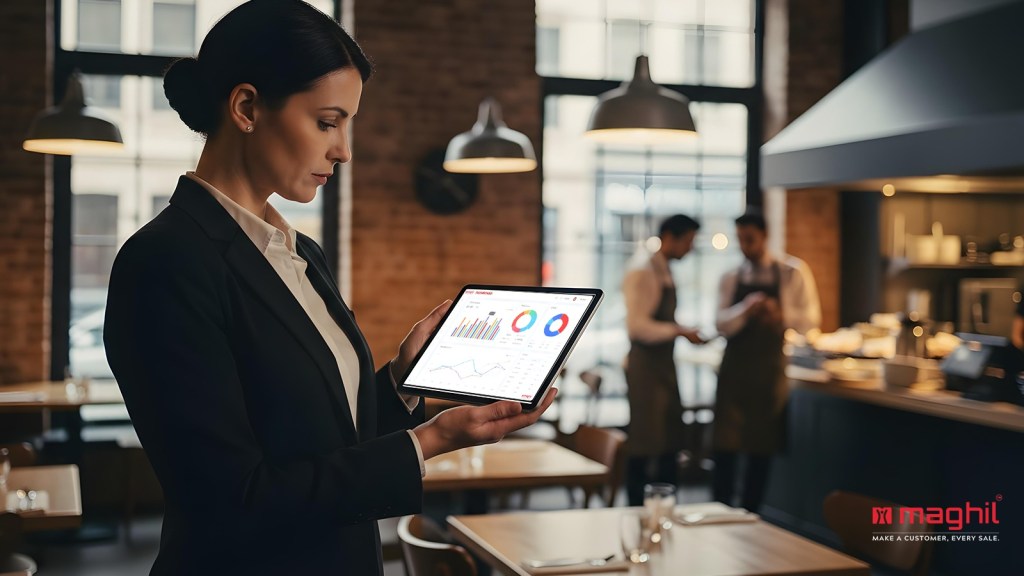
The biggest advantage of a multi-location POS system is centralized management. Instead of juggling spreadsheets or logging into different systems, restaurant owners can access a multi-outlet POS dashboard to monitor every location in real time.
- Track sales monitoring across QSR chains in multiple cities.
- Compare outlet performance for fine dining restaurants to maintain consistent service quality.
- Access consolidated reports for casual dine-in outlets with just a few clicks.
A robust restaurant analytics dashboard provides operators with the insights they need to make quick decisions, from menu adjustments to pricing strategies.
Streamlined Restaurant Inventory Control and Supply Chain Management
Managing food costs is one of the toughest challenges in multi-outlet restaurants. Without automation, discrepancies between outlets can quickly eat into profits.
A multi-outlet POS system simplifies restaurant inventory control by
- Auto-syncing stock across outlets to avoid shortages.
- Generating low-stock alerts and automated purchase orders.
- Reducing wastage by tracking ingredient usage in real time.
For QSRs, this ensures consistent menu availability during peak hours. For fine dining, it guarantees premium ingredient quality. And for casual dine-ins, it prevents overstocking and minimizes losses.
Faster Transactions and Staff Optimization
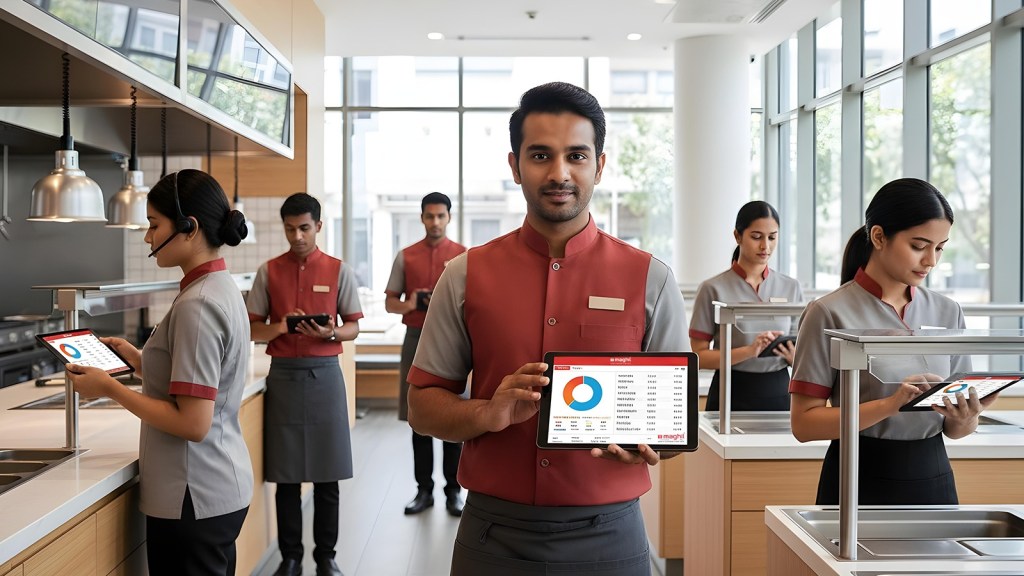
In today’s competitive U.S. restaurant market, speed and accuracy are non-negotiable. Customers expect faster transactions, whether they’re grabbing a coffee at a QSR or paying for a three-course meal at a fine dining restaurant.
An efficient restaurant POS system empowers staff to
- Process orders instantly with handheld devices.
- Accept multiple payment modes, including contactless and mobile wallets.
- Simplify split billing for dine-in guests.
Additionally, restaurant franchise POS software allows managers to schedule shifts, optimize labor costs, and monitor staff performance across multiple outlets. For fine dining, this could mean tracking upselling performance. For QSRs, it ensures adequate staffing during rush hours.
Delivering Consistent Customer Experience Across Outlets
A strong customer experience is what keeps diners coming back, and consistency is critical across multiple outlets. An integrated POS software for restaurants enables
- Loyalty programs that work seamlessly across all outlets.
- Personalized promotions based on customer purchase history.
- Smooth integration with online ordering and delivery platforms.
Imagine a customer visiting your QSR in New York and later dining at your Chicago branch. A multi-location POS system ensures their loyalty rewards, preferences, and past orders are recognized everywhere—building trust and brand loyalty.
Restaurant Analytics Dashboard for Performance Analysis
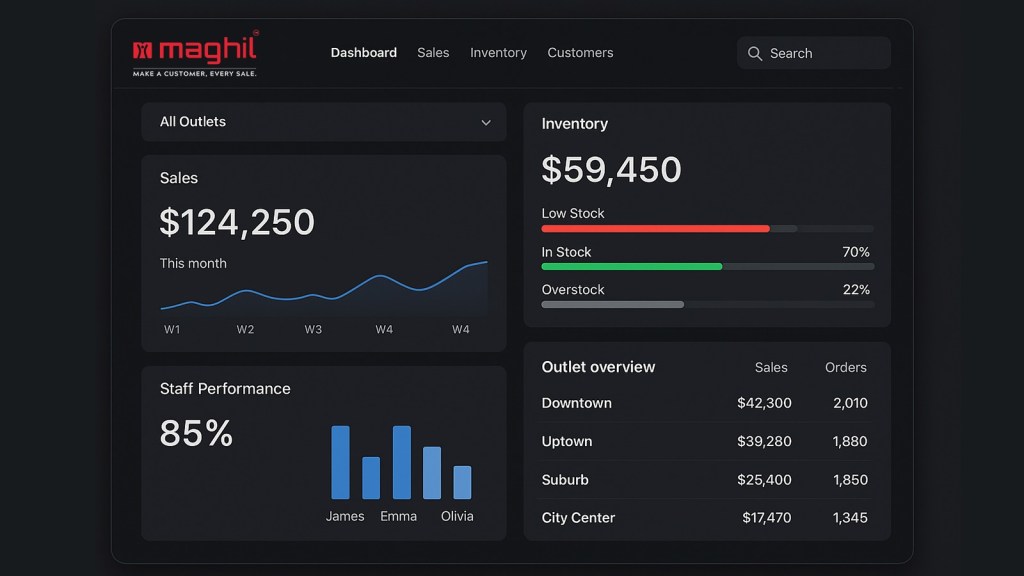
Data-driven decisions separate thriving restaurant chains from struggling ones. A restaurant analytics dashboard offers real-time performance analysis by consolidating outlet-wise metrics into actionable insights.
Key metrics include
- Top-selling items across different outlets.
- Revenue comparison between dine-in, delivery, and takeaway.
- Seasonal trends and customer behavior insights.
For example, a fine dining outlet may discover wine pairings drive higher ticket sizes, while a QSR may see stronger margins on combo meals. With such sales monitoring tools, restaurant groups can adapt quickly to maximize profitability.
Scaling Growth with Restaurant Franchise POS Software
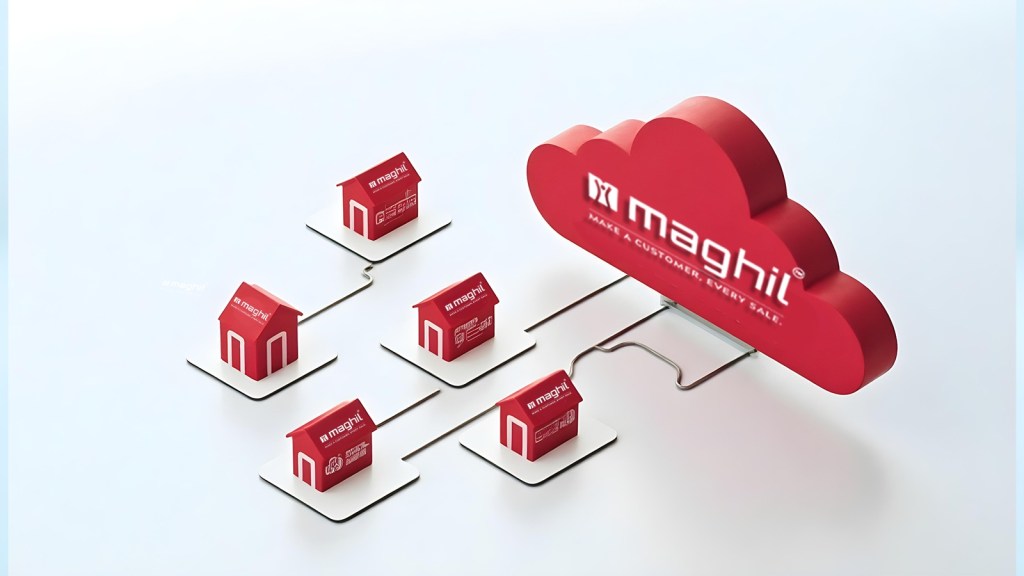
For U.S. restaurants looking to expand through franchises or new locations, scalability is often the biggest hurdle. A cloud-based restaurant franchise POS software eliminates this challenge by
- Standardizing menu updates across all outlets.
- Ensuring compliance with state-specific tax and payment regulations.
- Onboarding new outlets with minimal setup time.
This allows restaurant groups to expand confidently, knowing their multi-outlet POS system keeps operations unified and consistent across regions.
Conclusion
Managing multiple outlets doesn’t have to mean multiple headaches. The right multi-location POS system like Maghil POS gives restaurant owners and managers the power to centralize operations, control inventory, speed up service, and deliver exceptional customer experiences across all locations.
With features like a multi-outlet POS dashboard, restaurant analytics dashboard, and restaurant franchise POS software, today’s POS software for restaurants is no longer just about billing—it’s about scaling.
In the highly competitive U.S. market, investing in an effective restaurant POS system isn’t an option; it’s the key to mastering restaurant management and achieving long-term growth.

 MAGHIL