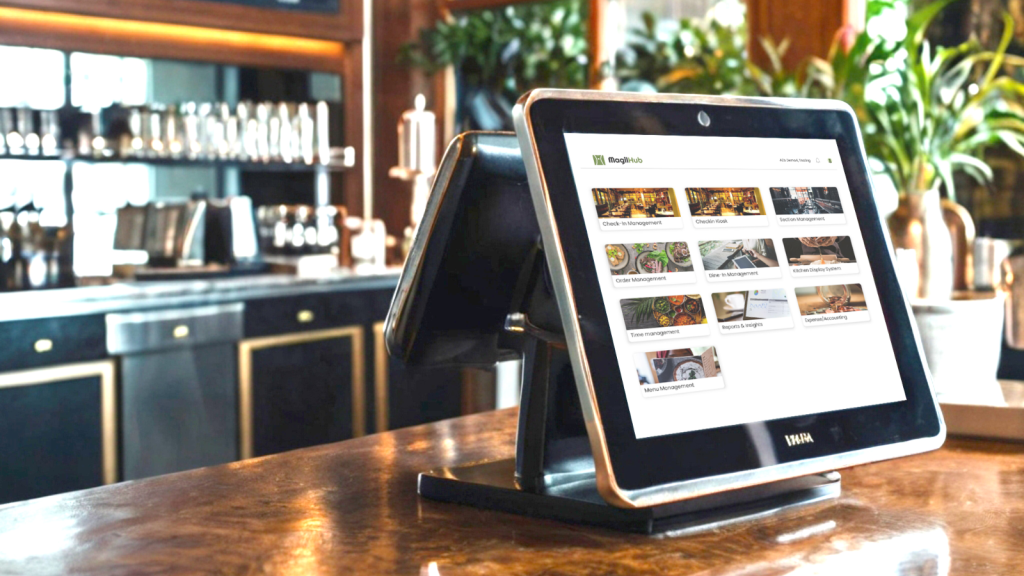
SWOT Analysis for Restaurants: Overview
In the highly competitive restaurant industry, success requires more than just excellent food and service; it calls for a well-planned management strategy. One of the most effective tools for this is a SWOT analysis, especially when combined with a robust POS (Point of Sale) system like Maghil POS. In this article, we’ll explore how a SWOT analysis can help you identify your restaurant’s strengths, weaknesses, opportunities, and threats, and how Maghil POS can enhance this process to drive your business to success.
What is a SWOT Analysis for a Restaurant?
A SWOT analysis is a strategic planning tool used to identify and evaluate the Strengths, Weaknesses, Opportunities, and Threats facing your restaurant. This analysis helps you understand where your business excels, where it can improve, what opportunities you can capitalize on, and what external factors could pose challenges. By conducting a SWOT analysis, restaurant owners and managers can make informed decisions that align with their business goals.
Why is a Restaurant SWOT Analysis Important?
A SWOT analysis is essential for restaurants as it provides a comprehensive overview of the internal and external factors that impact your business. It allows you to:
- Identify Strengths: Determine what sets your restaurant apart from competitors, such as a unique menu, exceptional service, or a prime location.
- Address Weaknesses: Recognize areas that need improvement, like slow service, inconsistent quality, or limited marketing efforts.
- Leverage Opportunities: Spot potential opportunities in the market, such as emerging food trends, new customer segments, or partnerships.
- Mitigate Threats: Identify and prepare for external threats like increased competition, changing regulations, or economic downturns.
By regularly conducting a SWOT analysis, you can stay proactive in managing your restaurant’s growth and sustainability.
How POS Enhances Restaurant SWOT Analysis?
A POS system like Maghil POS plays a crucial role in enhancing your restaurant’s SWOT analysis. Here’s how:
- Data-Driven Insights: Maghil POS provides detailed sales reports, customer preferences, and inventory management data. This information helps you accurately assess your restaurant’s strengths and weaknesses.
- Operational Efficiency: By streamlining order processing, inventory tracking, and customer management, a POS system can highlight operational strengths and pinpoint inefficiencies.
- Customer Trends: Analyze customer behavior and preferences through POS data to identify opportunities for menu expansion, marketing strategies, or service improvements.
- Risk Management: Use real-time data from Maghil POS to monitor and respond to potential threats, such as declining sales trends or inventory shortages.
With the integration of a POS system into your SWOT analysis, you gain a clearer, data-backed understanding of your restaurant’s performance and potential areas for growth.
Conducting a Restaurant SWOT Analysis: A Step-by-Step Guide
Step 1: Gather Data Start by collecting data on your restaurant’s performance, customer feedback, market trends, and financial reports. Maghil POS can be instrumental in providing accurate and up-to-date information.
Step 2: Identify Strengths List what your restaurant does well. Consider factors like customer satisfaction, menu diversity, and operational efficiency. Use POS data to highlight top-selling items and peak business hours.
Step 3: Recognize Weaknesses Identify areas where your restaurant struggles. This could include issues like slow service, high employee turnover, or frequent stockouts. POS reports can help pinpoint where these problems are most prevalent.
Step 4: Explore Opportunities Look for external opportunities that your restaurant can exploit. This could involve expanding your delivery services, introducing new menu items, or targeting a new demographic.
Step 5: Anticipate Threats Consider external factors that could negatively impact your restaurant, such as new competitors, rising food costs, or changes in consumer behavior. Use POS analytics to track and anticipate these threats.
Practical Examples of SWOT Analysis with a POS
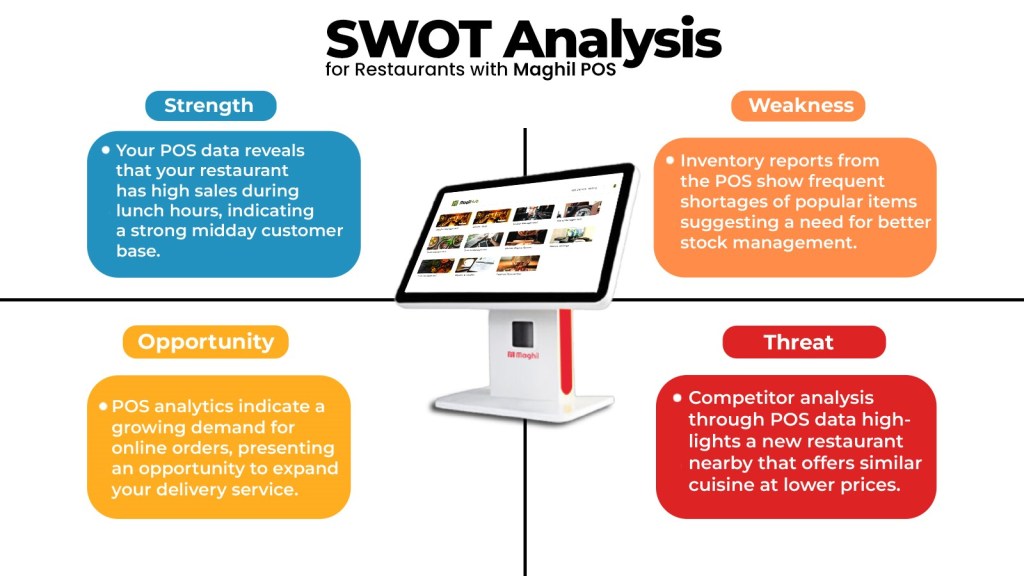
- Strengths: Your POS data reveals that your restaurant has high sales during lunch hours, indicating a strong midday customer base.
- Weaknesses: Inventory reports from the POS show frequent shortages of popular items, suggesting a need for better stock management.
- Opportunities: POS analytics indicate a growing demand for online orders, presenting an opportunity to expand your delivery service.
- Threats: Competitor analysis through POS data highlights a new restaurant nearby that offers similar cuisine at lower prices.
By integrating POS data into your SWOT analysis, you can create a more dynamic and responsive strategy for your restaurant.
Utilizing POS Data to Stay Ahead of Competitors
Maghil POS offers a wealth of data that can be used to gain a competitive edge. By consistently reviewing sales trends, customer feedback, and inventory levels, you can spot market gaps that your competitors might have missed. Additionally, tracking competitor pricing and promotions through POS data can help you adjust your strategies to remain competitive.
Boosting Restaurant Efficiency and Success with a POS System
Efficiency is key to restaurant success, and a POS system like Maghil POS is designed to streamline operations. From order management to employee scheduling and inventory control, a POS system helps you optimize every aspect of your business. This increased efficiency not only enhances customer satisfaction but also boosts profitability, making your restaurant more resilient to market changes.
SWOT Analysis Best Practices for Restaurants Using POS
- Regular Reviews: Conduct SWOT analyses regularly, using updated POS data to keep your strategies relevant.
- Collaborative Approach: Engage your team in the SWOT analysis to gather a range of insights and perspectives.
- Focus on Data-Driven Decisions: Use POS data to support your SWOT findings and guide your decision-making process.
- Adapt and Evolve: As your restaurant grows, revisit and revise your SWOT analysis to reflect new challenges and opportunities.
By combining a thorough SWOT analysis with the powerful capabilities of Maghil POS, restaurant owners can create strategies that maximize strengths, address weaknesses, seize opportunities, and mitigate threats, ensuring long-term success in a competitive market.
FAQs
What is a SWOT analysis for restaurants?
A SWOT analysis for restaurants is a strategic tool used to identify a business’s Strengths, Weaknesses, Opportunities, and Threats, providing insights that help in making informed decisions.
How does a POS system contribute to a restaurant’s SWOT analysis?
A POS system enhances SWOT analysis by providing data-driven insights into sales, customer behavior, inventory, and operational efficiency, helping to identify strengths and weaknesses more accurately.
What are some weaknesses of a restaurant?
Common weaknesses in restaurants might include inconsistent food quality, high employee turnover, slow service, poor marketing efforts, and inadequate inventory management.
What are some threats of a restaurant?
Threats to a restaurant can include new competitors, rising costs of ingredients, changes in consumer preferences, economic downturns, and regulatory changes.

 MAGHIL