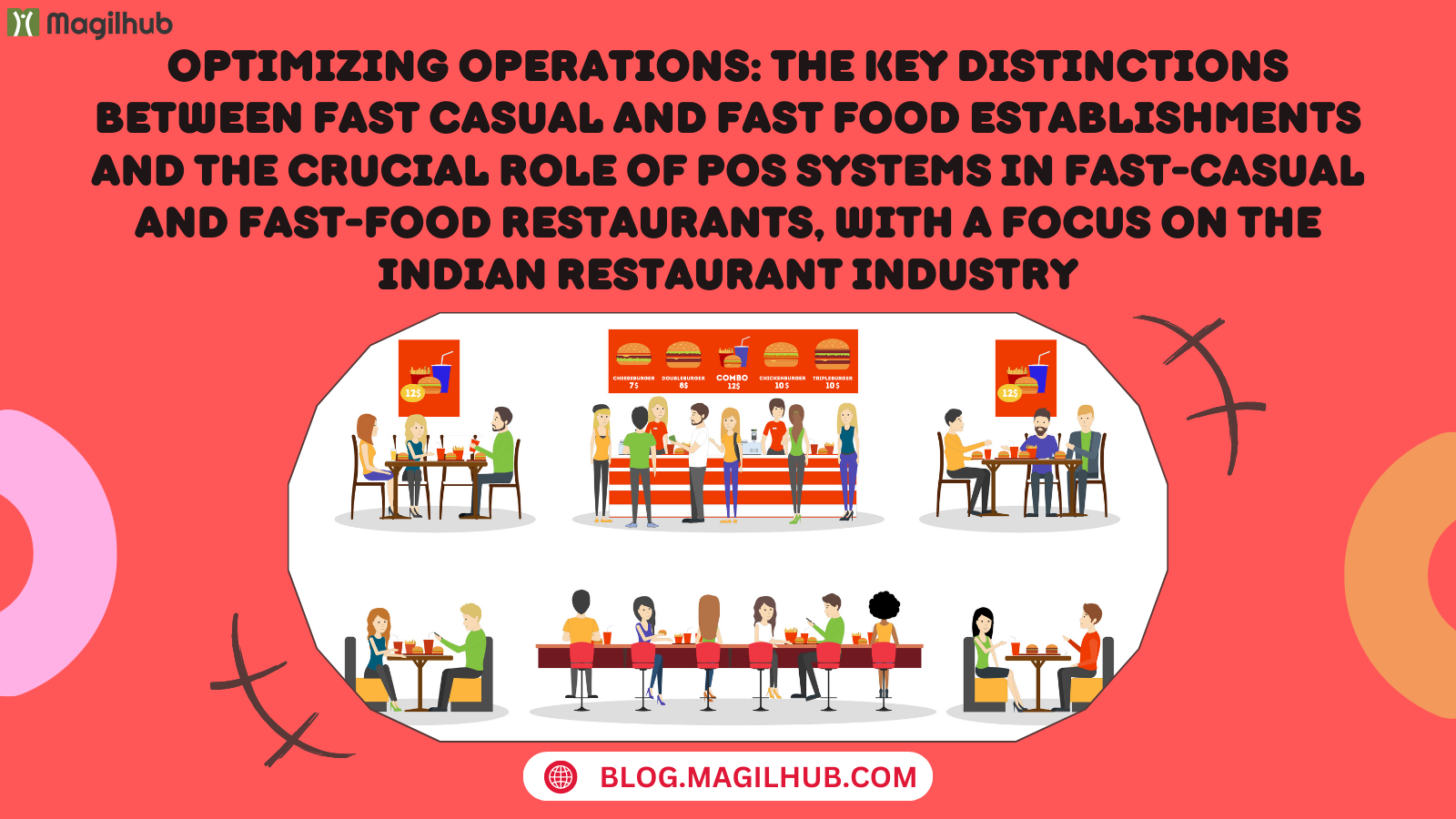
Point of Sale (POS) systems play a crucial role in the success and efficiency of fast-casual and fast-food restaurants, and their significance is particularly pronounced in the context of the Indian restaurant industry. These establishments, while sharing similarities, also have distinct characteristics that necessitate tailored POS solutions. Let’s delve into the multifaceted reasons why a robust POS system is highly essential for such restaurants, with a focus on the nuances of the Indian restaurant landscape.
Understanding the Key Differences between Fast Casual and Fast-Food Restaurants:
1. Ambiance and Service Style:
Fast-Casual: Offers a more relaxed atmosphere with counter ordering but often provides higher-quality ingredients and a more extensive menu.
Fast Food: Emphasizes speed and convenience, typically featuring a quick-service counter and a limited menu.
2. Price Point:
Fast-Casual: Positioned at a slightly higher price point, reflecting the use of fresher ingredients and a more nuanced dining experience.
Fast Food: Characterized by lower price points, aiming for affordability and quick service.
3. Customization:
Fast-Casual: Customers often have the option to customize their orders, reflecting a more personalized dining experience.
Fast Food: Standardized menu items with limited customization options, focusing on speed and efficiency.
4. Ingredients and Quality:
Fast-Casual: Emphasizes higher-quality ingredients, often prepared to order, contributing to a perceived higher quality of food.
Fast Food: Focuses on speed and efficiency, with standardized preparation methods and ingredients.
General Importance of POS in Fast-Casual and Fast-Food Restaurants:
1. Order Accuracy:
Fast-Casual: In fast-casual establishments, where customers often customize their orders, a POS system ensures accuracy in recording specific preferences.
Fast Food: Quick and precise order entry is critical in fast-food settings where speed is a priority.
2. Speed and Efficiency:
Fast-Casual: Streamlining the ordering process ensures faster service without compromising on the quality of food.
Fast Food: Rapid order processing and fulfillment are fundamental to meeting the high-volume demands characteristic of fast-food restaurants.
3. Inventory Management:
Fast-Casual: Real-time tracking of ingredients helps manage inventory efficiently, reducing waste and ensuring menu availability.
Fast Food: Inventory control is crucial to prevent shortages, especially for popular items.
4. Menu Flexibility:
Fast-Casual: POS systems allow for easy menu updates and modifications, accommodating changing trends and customer preferences.
Fast Food: Quick adaptation of the menu to cater to evolving tastes and market demands is facilitated by a flexible POS.
5. Customer Relationship Management (CRM):
Fast-Casual: CRM features assist in building customer loyalty through targeted promotions and personalized experiences.
Fast Food: CRM tools can be employed to gather customer data and insights, enhancing marketing strategies.
6. Integration with Online Ordering:
Fast-Casual: Seamless integration with online platforms facilitates order placement and payment, enhancing the overall customer experience.
Fast Food: Online orders are efficiently processed, reducing wait times and improving customer satisfaction.
7. Employee Management:
Fast-Casual: Employee scheduling, performance tracking, and training modules contribute to staff efficiency and customer service.
Fast Food: Effective employee management features streamline operations, especially during peak hours.
Special Considerations for the Indian Restaurant Industry:
1. Diverse Menu Items:
The Indian restaurant industry often offers a wide array of dishes, each with unique ingredients and preparation methods. A POS system tailored for Indian restaurants must handle diverse menu items efficiently.
2. Complex Ordering Process:
Indian cuisine may involve intricate customization and specific dietary preferences. A POS system designed for the Indian market should handle complex orders with ease.
3. Regional Variances:
India is culturally diverse, and regional variations in cuisine are significant. A customizable POS system can cater to the specific needs and regional variations of Indian restaurants.
4. Integration with Payment Methods:
Indian customers often use a variety of payment methods, including digital wallets, UPI, and traditional cards. A POS system must integrate seamlessly with these diverse payment options.
5. Compliance and Taxation:
Indian restaurants need to comply with diverse taxation regulations. A POS system that automates tax calculations and generates accurate financial reports is crucial for compliance.
In conclusion, a robust POS system is indispensable for both fast-casual and fast-food restaurants, providing benefits such as order accuracy, speed, inventory management, menu flexibility, CRM, and employee management. In the Indian restaurant industry, the unique characteristics of diverse cuisine, complex ordering processes, regional variances, and compliance requirements necessitate a specialized POS solution that addresses these specific needs. Understanding the distinctions between fast-casual and fast-food establishments is crucial for tailoring the POS system to meet the unique demands of each segment within the broader restaurant industry.

 MAGHIL